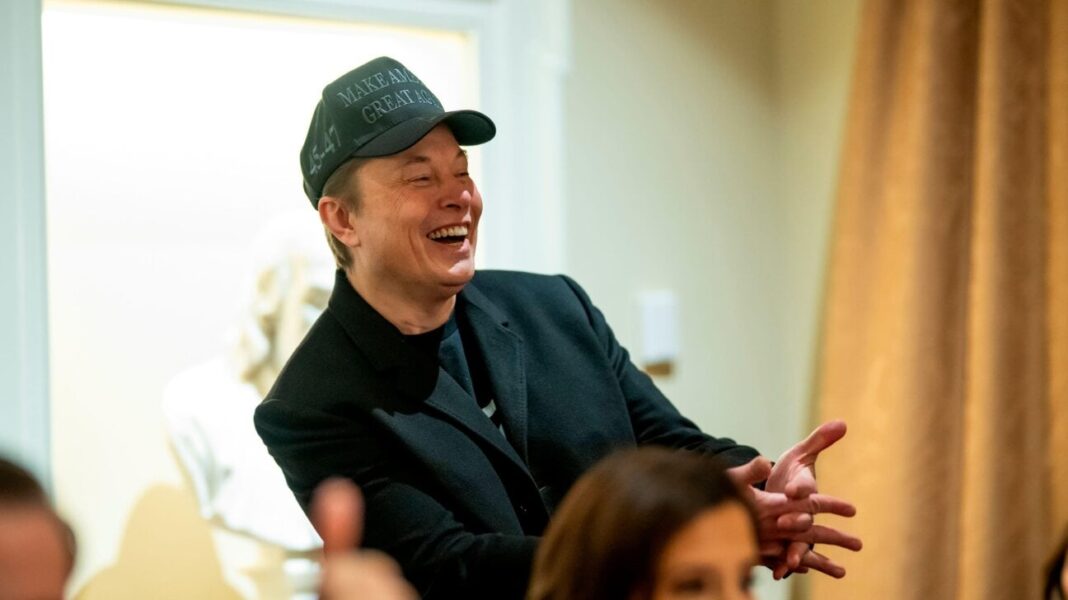
Elon Musk’s X Corp has filed an antitrust lawsuit against dozens of music publishers – plus the National Music Publishers’ Association (NMPA) – accusing them of colluding to force the social media platform into taking industrywide licenses at “supracompetitive rates”.
At the heart of the complaint: an allegation that the NMPA coordinated a campaign to inundate X with DMCA takedown notices on behalf of publishers – over 200,000 posts targeted in the first year alone, and nearly 500,000 since the major publishers joined the effort in 2023.
X claims this campaign was designed to unfairly pressure the platform into licensing deals, rather than to address legitimate copyright concerns.
A prediction: the music industry players involved in this suit may soon point to both Meta/Instagram and YouTube, where similar widespread takedown requests have occurred in the past – but ultimately led to harmonious licensing agreements.
YouTube has said it paid music industry rightsholders over USD $8 billion in the year to end of June 2025. Around 30% of that money is expected to have been generated by ads on user-generated content videos that contain music – with the correct rightsholders detected by the platform’s Content ID technology.
X Corp’s 53-page complaint, filed on Friday (January 9) in the US District Court for the Northern District of Texas and obtained by MBW, names the NMPA along with what the filing describes as “18 Music Publishers and their affiliates” as defendants.
Those defendants include Sony Music Publishing, Universal Music Corp., Warner Chappell Music, BMG Rights Management, Kobalt Music Publishing, Concord Music Group, Hipgnosis Songs Group, and Downtown Music Publishing.
X alleges that these publishers “colluded through NMPA in a concerted refusal to deal with X independently” and that “the object of this scheme [was] to coerce X into taking licenses to musical works from the industry as a whole, denying X the benefit of competition between music publishers”.
The complaint claims this alleged collusion “is in keeping with NMPA President and CEO David Israelite‘s admonition that the music-publishing industry should ‘work together to expand the pie,’ and not turn on one another to try and get a bigger piece of the pie.’”
X’s filing can be read in full here.
At the center of X’s allegations is a claimed October 2021 email from Israelite to X, sent on behalf of “all music publishers”.
According to the complaint, Israelite “threatened that NMPA would soon launch ‘a massive program’ to inundate X with DMCA takedown notices ‘on a scale larger than any previous effort in DMCA history’”.
X claims that Israelite warned the program would harm X by “quickly turn[ing] many of [X’s] most popular users into repeat infringers,” which would require X to deplatform them under its policies.
The complaint alleges that Israelite made clear that “X could make this all go away—for a price”.
According to X: “Mr. Israelite explained that X could avoid a coordinated takedown-notice barrage if it agreed to do ‘what many other social media companies have done’ and ‘develop a partnership’ with NMPA and the Music Publishers to license their musical compositions.”
Standard practice or collusion?
What X characterizes as anticompetitive collusion, music publishers would argue is standard industry practice.
For one thing, the licensing arrangements that X’s lawsuit attacks are the same frameworks in place with virtually every other major social media platform.
As X’s own complaint acknowledges, YouTube, Facebook, Instagram, TikTok, Snap, Twitch, and Roblox have all entered into licensing agreements with music publishers, in many cases following negotiations coordinated through the NMPA.
Publishers would therefore likely argue that X is not a victim of collusion – but rather an outlier that has refused to pay for music while its competitors have done so.
“We allege that X has engaged in copyright infringement for years, and its meritless lawsuit is a bad faith effort to distract from publishers’ and songwriters’ legitimate right to enforce against X’s illegal use of their songs.”
David Israelite, NMPA
Indeed, X’s lawsuit directly cites a public tweet from David Israelite to Elon Musk in April 2022, after news broke that Musk would acquire Twitter: “@elonmusk Please fix the Twitter policy of not paying songwriters for their contribution to the platform. All other major social media companies have already done the same.”
Responding to X’s antitrust lawsuit, NMPA President and CEO David Israelite said in a statement to media: “X/Twitter is the only major social media company that does not license the songs on its platform.
“We allege that X has engaged in copyright infringement for years, and its meritless lawsuit is a bad faith effort to distract from publishers’ and songwriters’ legitimate right to enforce against X’s illegal use of their songs.”
X brings its claims under Section 1 and Section 2 of the Sherman Act, alleging unlawful agreement in restraint of trade, conspiracy to monopolize, monopolization, and attempted monopolization.
The complaint alleges that the music publishers “account for over 90%” of the market for licenses to copyrighted musical compositions in the United States.
X is seeking a permanent injunction, treble damages, punitive damages, costs, and attorneys’ fees.
Over 200,000 posts targeted in first year
According to the lawsuit, the NMPA began bombarding X with takedown notices “virtually every single week” starting in December 2021.
“In the first year alone, these takedown notices identified over 200,000 X posts,” the complaint states, detailing weekly notices ranging from 84 pages to over 1,100 pages each.
The complaint adds: “And since the scheme began, the takedown notices have caused X to suspend more than 50,000 users because of claims of copyright infringement.”
X alleges that “these notices included allegedly infringing material from some of X’s top users with millions of followers,” including “creators like Logan Paul, the Kansas City Chiefs and the Detroit Lions football teams, bands Linkin Park and BTS, and media outlets like E! News, ESPN FC, and Golf Digest“.
The complaint claims that Universal, Sony, and Warner Chappell initially “declined to participate in the conspiracy orchestrated by NMPA and the remaining Music Publishers.”
The lawsuit quotes an alleged May 2022 email from a Warner Chappell Senior Vice President: “[We’ve] chosen not to be involved in any NMPA takedown activities to date as we have been hopeful that [X] would engage with us as they develop their music strategy, but we are getting regular inquiries from senior management about [X’s] licensing status.”
According to the complaint, by early 2023, “when none of the Majors had secured a musical-composition license agreement, they each joined the conspiracy to extract industrywide licenses.”
X claims that since the majors joined, “NMPA has sent thousands of pages of takedown notices, identifying nearly 500,000 posts allegedly infringing on copyrights of the Majors, as well as the Non-Majors.”
Allegations of ‘baseless’ takedowns
X argues that many of the NMPA’s takedown notices targeted content that was not subject to a legitimate claim of infringement, describing the campaign as “pretext” for an “extortionate” scheme.
It adds: “Not only have NMPA’s takedown notices claimed content similar to that posted by NMPA executives and lawyers was infringing, but they have also forced X to remove posts that are not subject to copyright protection.”
X cites examples including “a video of a high school’s sports-award ceremony” where “music plays briefly” until “the athlete takes the award and walks off the stage.”
The complaint states: “Although there is no reasonable basis for censoring this video focused on a high school athlete’s achievement based on the de minimis, non-commercial use of background music in the video, X had to take it down because of Defendants’ scheme.”
The lawsuit suggests that the alleged conspiracy against X follows a “broader playbook” that publishers and the NMPA have leveled against other platforms, including Twitch, Roblox, Peloton, and Snap.
Curiously, the evidence X cites for the NMPA’s “extortionate” playbook is a series of negotiations… that ended in what appear to be amicable licensing agreements.
Regarding Twitch, X’s complaint states that around May 2020, Amazon‘s livestreaming service “received a sudden influx of DMCA takedown notices from NMPA on behalf of music publishers”.
The lawsuit notes that the Twitch fallout ended in late September 2021 when the platform “announced a deal with NMPA to ‘build productive partnerships between the service and music publishers’”.
“Curiously, the evidence X cites for the NMPA’s “extortionate” playbook is a series of negotiations… that ended in what appear to be amicable licensing agreements.”
Similarly, the complaint notes that the NMPA and music publishers sued Roblox in June 2021, which “ended in September 2021, when Roblox and NMPA settled the claims against Roblox and set up ‘an industry-wide opt-in open to all eligible NMPA publishers’ to negotiate go-forward music-licensing deals.”
The NMPA announced at the time that the agreement “expands Roblox’s existing relationships with major publishers to the entire publishing industry.”
In other words, both Twitch and Roblox now pay (something) for music.
X argues that the decision to coordinate takedowns through the NMPA rather than individually “makes economic sense only if the objective is to facilitate coordination among competing Music Publishers and target X’s most popular users so as to apply maximum pressure to X to negotiate with them collectively”.
Many in the music business would argue that an industry-wide opt-in agreement for publishing licenses actually makes economic sense for another reason: it’s the quickest and most efficient route for social media sites with hundreds of millions of users to gain legal clearance for music content their audience is likely to upload.
Numerous music publishers, including Sony Music Publishing, Universal Music Publishing Group, and Warner Chappell Music, sued X Corp in June 2023, alleging “rampant infringement of copyrighted music” on X.
The initial complaint sought more than USD $250 million in damages for approximately 1,700 works.
In June 2025, the music publishers and X were granted a 90-day pause to their copyright lawsuit for “good faith negotiations” to try to settle out of court.
A November 25 update to the court stated that the parties had “made very substantial progress toward settlement and worked on a written settlement agreement.”
X’s filing of this antitrust lawsuit obviously suggests those settlement discussions did not result in an agreement, despite this apparent progress.Music Business Worldwide